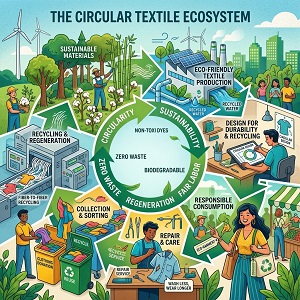

The European fashion industry is navigating a critical turning point that could redefine the future of low-cost, high-volume clothing. For years, fast fashion operated as an unstoppable engine, capitalizing on lightning-fast production cycles and ultra-cheap pricing. However, a powerful combination of aggressive European Union regulations, mounting environmental pressure, and shifting consumer consciousness has initiated an unprecedented backlash against this throwaway culture.

Rather than relying on voluntary corporate pledges, European lawmakers are systematically dismantling the conditions that allowed ultra-cheap apparel to thrive. Throughout 2025 and 2026, a wave of stringent reforms has shifted the financial burden of textile waste from municipal governments directly onto the brands. Under new Extended Producer Responsibility schemes, clothing companies must now fund the collection, sorting, and recycling of their products. Furthermore, large corporations face a strict ban on destroying unsold apparel, closing a long-standing loophole where discarding excess inventory was cheaper than storing or recycling it.
France has taken the vanguard in this regulatory crackdown, imposing environmental penalties of up to several euros per garment on ultra-fast fashion items, with fees set to rise progressively by 2030. The French legislation also targets digital marketing channels by restricting influencer promotions for ultra-fast fashion brands, directly hitting the algorithmic heart of platforms like Shein and Temu. This regional pressure is compounded by broader EU customs reforms, which introduced a flat fee on low-value parcels. By eliminating the duty-free loophole for shipments under 150 euros, the EU has significantly increased logistics costs and delivery friction for overseas e-commerce imports.
Simultaneously, a cultural shift is quietly taking root among European consumers. Faced with staggering statistics on textile waste—where the average European discards kilograms of clothing annually while less than one percent is recycled back into new garments—shoppers are seeking alternatives. Demand for rental platforms, secondhand apparel, and durable slow fashion brands has surged. This behavioral shift is particularly pronounced among Gen Z consumers, who increasingly prioritize product longevity and ethical production over the thrill of a cheap, short-lived purchase.
While fast fashion is not experiencing an overnight collapse, its traditional business model is becoming unsustainable in Europe. The industry is being forced to adapt to a highly regulated, high-cost environment where scaling cheaply is no longer viable. Ultimately, Europe is not banning fast fashion outright, but it is successfully ending the era of consequence-free, disposable clothing.