
A large-scale textile waste smuggling operation involving the illegal shipment of 4,200 tonnes of waste from Italy to Turkey has been dismantled by European anti-fraud authorities. The investigation, led by the European Anti-Fraud Office (OLAF) in collaboration with the Italian Carabinieri and Turkish customs, exposed a fraudulent scheme specifically designed to evade recycling costs and bypass strict environmental regulations.
The smuggled waste consisted primarily of acrylic fibers, a synthetic material that persists in the environment for up to 200 years. Because these materials require sophisticated and expensive recycling processes, the perpetrators allegedly mislabeled the shipments to circumvent mandatory disposal requirements. OLAF’s Director General, Petr Klement, stated that such schemes provide organized networks with opportunities for illegal gains and highlighted the growing necessity of international cooperation in combating environmental crime.
The investigation expanded significantly when a joint inspection in Turkey led to the discovery of an additional 2,100 tonnes of textile waste stored in a warehouse linked to a recycling facility that failed to comply with Turkish environmental laws. Furthermore, investigators located another 768 tonnes of Italian-sourced textile waste at the port of Mersin, which were also incorrectly labeled and prepared for illegal dumping. In response to these findings, Italian authorities raided a business complex in Brescia, seizing facilities, a fleet of trucks, and approximately €12 million in financial assets.
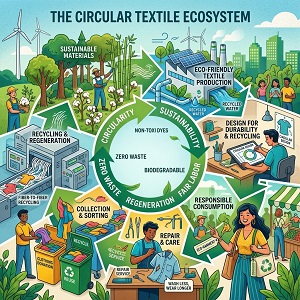
The management of textile waste remains a critical challenge for the European Union. Although the EU textile and clothing sector generated €170 billion in turnover in 2023, the vast majority of the 12.6 million tonnes of textile waste generated in 2019 was not collected for reuse or recycling. To address this, the European Commission implemented new textile-waste management rules in 2025 to prevent waste from being falsely labeled as reusable goods for export.
Amidst this waste crisis, France is leading a coalition of five EU member states to pressure the European Commission for stricter measures against the rise of "ultra-fast fashion". The coalition warned that this rapidly expanding business model threatens environmental goals, overwhelms waste management systems, and fuels unsustainable consumer behavior. The member states are calling for enhanced oversight of online platforms and the reinforcement of regulations under the Circular Economy Act to curb the influx of waste arriving in Europe.