
Digital transformation in the textile industry is no longer merely a future ambition; it is now a baseline requirement for survival in 2026. This shift in paradigm was evident at the Texprocess 2026 trade show in Frankfurt this past spring, where the industry moved beyond discourse into implementing integrated workflows across both product development and production processes. Over 1,700 exhibitors showcased cutting-edge technologies, including automation, Artificial Intelligence (AI), intelligent material flow systems, and real-time AI-based quality control to streamline factory operations.
The most prominent market trend is the shift away from standalone tech tools toward "connected digital ecosystems," where software and hardware integrate seamlessly from design to production. This transformation is now accessible to businesses of all sizes, not just large corporations. Debbie McKeegan of FESPA emphasizes that standardized, automated workflows are essential for ensuring efficiency and scalability, allowing manufacturers to transition seamlessly between high-volume production and custom, small-batch orders without compromising quality or lead times.
On the factory floor, the new production standard is founded on AI and automation. The use of AI for predictive maintenance, through smart sensors, can reduce machine downtime by up to 40 percent by catching failures weeks before they occur. Additionally, automated computer vision systems now achieve up to 99.3 percent accuracy in defect detection, rendering traditional manual inspections largely obsolete. The application of AI for schedule automation has also been shown to reduce textile production waste and lead-time variance by as much as 96 percent.
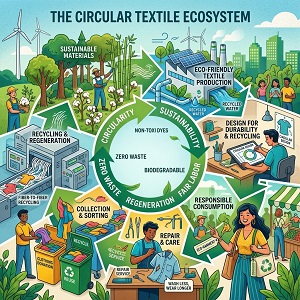
Beyond operations, technology has propelled sustainability to an industrial scale. Fiber-to-fiber recycling processes and the use of bio-based materials, such as mycelium leather, are now deployed commercially to reduce reliance on resource-intensive crops. Furthermore, strict regulations are making digital traceability—such as tracking energy, water, and material origin—a mandatory standard for securing contracts, prompting textile companies to invest heavily in technology.
The greatest challenge in this integration is the human element, specifically the need for workforce reskilling. The role of the "machine minder" is fading, and it is projected that by 2030, nearly 40 percent of the workforce in developed nations will require significant reskilling to manage complex software-hardware interfaces. The industry is transforming from a "volume-based commodity provider" into a "value-based service provider," where speed, precision, and sustainability define commercial success. For brands and mills that fail to invest in integrated digital and sustainable infrastructures, the risk of obsolescence in a market that mandates high operational efficiency and transparency is a real threat.