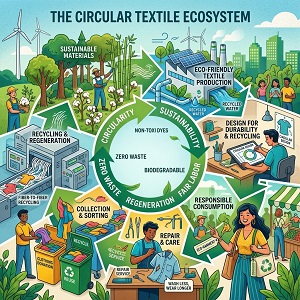

The fast fashion business model, which has long served as the driving force behind Europe’s clothing market, is currently facing its most significant challenge due to a combination of tightening regulatory oversight and shifting environmental consciousness among consumers. The European Union (EU) has taken decisive action through a wave of new legislation designed to curb textile waste, which currently estimates at over 12 million tonnes annually. These reforms include extended producer responsibility, where clothing brands are now mandated to fund the collection, sorting, and recycling of textiles. Furthermore, large companies are strictly prohibited from burning or discarding unsold apparel, fundamentally shifting the financial burden of waste management from governments to brands.
France has led the most aggressive stance by targeting ultra-fast fashion platforms through environmental penalties per garment, restrictions on influencer promotions, and strict platform accountability rules. This move signals a broader EU trajectory, transitioning from voluntary sustainability pledges to punitive financial regulations. Additionally, starting in 2026, the EU introduced a 3 euro customs fee on low-value parcels under 150 euros, effectively closing a long-standing duty-free loophole heavily utilized by major e-commerce imports. This policy responds to a massive surge in low-value parcel imports—from approximately 1.3 billion in 2022 to nearly 6 billion in 2025—many of which failed compliance checks for safety or labeling standards.
Consumer behavior is also shifting away from the "cheap and new" mentality toward more durable alternatives. While average textile consumption is 19 kg per person annually, only about 1 percent is recycled into new clothing, fueling a rising demand for resale platforms, rental fashion, and durable slow fashion brands, particularly among Gen Z consumers. While fast fashion is not disappearing immediately, the model is increasingly weakened by higher compliance costs, advertising restrictions, and rising logistics expenses.
Rather than an outright collapse, the industry is undergoing a forced evolution. The EU is systematically dismantling the conditions that allowed fast fashion to thrive by shrinking duty-free imports, increasing environmental penalties, and mandating waste responsibility. The ultimate result is a structural turning point that is transforming the entire sector into a slower, more expensive, and compliance-heavy industry.