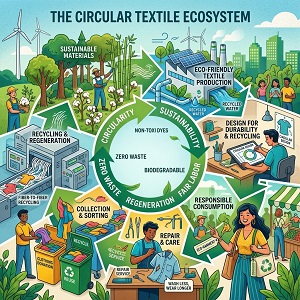

The textile and footwear manufacturing industry in Vietnam can no longer afford to focus solely on chasing production growth targets. The Southeast Asian export powerhouse is currently caught in a fierce race against time to comply with tightening environmental regulations rolled out by the European Union (EU), which happens to be one of their most crucial export destinations. According to the latest trade data, the value of Vietnam's exports to the Blue Continent in 2025 surged by 10.1 percent year-on-year, breaking a fantastic figure of $56.2 billion—a number that underscores just how heavily their upstream manufacturing economy relies on European consumers.
However, golden access to the EU market now comes with very heavy conditions. Brussels is aggressively deploying an ambitious sustainability agenda, including the Carbon Border Adjustment Mechanism (CBAM) and the Ecodesign for Sustainable Products Regulation (ESPR). These strict rules force global suppliers to redesign their products to be more durable, repairable, and recyclable, while also mandating full supply chain transparency through the Digital Product Passport system. The new regulation also gradually implements a strict ban on the practice of destroying unsold fashion items in the market.
Responding to this pressure, the Vietnamese Government has actually moved quickly by launching a long-term industrial development strategy up to 2030 with a vision toward 2035, placing the circular economy as its legal backbone. On the ground, giant manufacturers have begun investing heavily in green machinery upgrades, installing solar panels, and slashing carbon emissions. Nevertheless, this green transition process is not running smoothly for all parties due to a massive capital disparity.
"Large-scale enterprises may have the financial capacity to immediately upgrade technology and purchase international green certifications. However, for hundreds of small and medium enterprises (SMEs) acting as upstream subcontractors, their main barrier is the difficulty of accessing green finance," said the Head of the Vietnam Textile Chamber of Commerce and Industry during an economic recovery discussion in Hanoi. If these small suppliers fail to match the speed of the regulation, they face the real risk of being excluded from high-value export supply chains.
This difficult situation has triggered strong demands from industry players for the government to not only establish rigid legal standards, but to also actively pour out tax incentives and direct capital assistance for circular innovation. Without a comprehensive supporting ecosystem, it is feared that the implementation of these green regulations will run unevenly and sacrifice millions of local workers. Now, the future of Vietnam's fashion industry heavily depends on how quickly the synergy between policymakers and business actors can bridge the European Union's green ambitions into daily factory operational practices.