
In a significant move to bolster the textile industry, the Indian government has sanctioned a subsidy of approximately ₹52 crore for 400 textile processing units within the Ichalkaranji Powerloom Megacluster. This subsidy aims to facilitate the upgradation of existing machinery and the acquisition of new equipment.
India's textile industry faced a significant shift in trade dynamics during the financial year 2023 (FY23) as polyester yarn imports soared by 65%, while exports plummeted by 38%, according to CareEdge Ratings. This marked a pivotal moment as India became a net importer of polyester yarn for the first time in a decade, a trend that continued into the first eight months (8M) of FY24. The surge in imports, primarily from China, inundated the domestic market, impacting the pricing power of Indian manufacturers and causing a decline in export volumes.
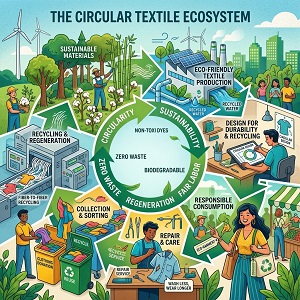
In a groundbreaking move towards sustainability and self-sufficiency, the Bangladesh Textile Mills Association (BTMA) is spearheading efforts to transform garment waste into recyclable materials, with the potential to cut cotton imports by a substantial 15 percent. President Mohammad Ali Khokon envisions this initiative as a pivotal step for the industry.
Page 22 of 30
Advertorial
Most Read
- ITMF Releases International Textile Industry Statistics
- Iran's Textile Industry: A Growing Export Powerhouse
- Polyester Filament Yarn: Navigating Demand Growth Trends in 2023
- Challenges and Opportunities in Indonesia’s Textile Industry: Navigating Regulatory Hurdles
- Indonesian Batik Import Policy: Impact on Local Craftsmen