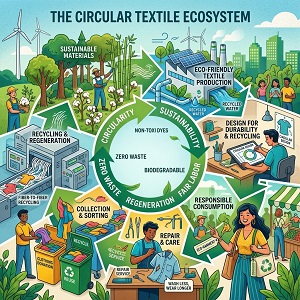

The readymade garment and textile industry in Bangladesh is taking a major step toward modernizing its core sector to become more environmentally friendly and globally competitive. This strategic milestone was officially sealed through the signing of a memorandum of understanding (MoU) on circular economy cooperation between the governments of Bangladesh and Belgium's European counterpart, the Netherlands.
The landmark agreement was signed by Bangladesh Commerce Minister Khandakar Abdul Muktadir and Dutch Minister of Climate and Green Growth Stientje van Veldhoven-van der Meer at the commerce ministry. Under this partnership, both nations agreed to expand cooperation focusing on efficient resource utilization across the textile value chain, waste reduction, recyclable production systems, and green industrialization.
Commerce Minister Muktadir stated that adopting sustainable production systems and circular approaches is no longer optional, but an absolute necessity in the global textile industry. Given that Bangladesh's garment supply chains are deeply integrated into international markets, strengthening cross-border cooperation is vital to maintaining long-term economic resilience.
He emphasized that the circular economy extends beyond environmental protection; it is directly tied to reinforcing the long-term competitiveness of Bangladesh's export sector. This transformation is expected to attract sustainable investments, create green jobs, and address strict demands in international markets, especially as Bangladesh progresses toward graduating from the least developed country (LDC) category.
Meanwhile, Dutch Minister Stientje van Veldhoven-van der Meer stressed that expanding the circular economy is an urgent agenda that no single nation can achieve alone. Close international cooperation, commercial partnerships, and coordinated initiatives across the entire supply chain are essential for a successful green transition. She expressed enthusiasm for working alongside Bangladesh both bilaterally and in international forums to drive results-oriented actions.
Through this bilateral synergy, Bangladesh's commerce ministry anticipates new opportunities for green technology adoption, innovation, and enhanced market competitiveness within the nation's textile and garment sectors, paving the way for a resilient and future-oriented economy.