
Vietnam's textile and garment industry is demonstrating strong resilience in the global market, setting an ambitious export target of approximately $48 billion for 2026. According to statistics from the Vietnam Textile and Apparel Association (VITAS), this positive momentum is backed by shipments reaching nearly $31.7 billion in the first eight months of 2026, marking a 2.9 percent increase year-on-year.
To achieve this milestone, businesses across the sector are shifting their strategies from merely chasing output volume toward improving growth quality. Garment manufacturers are focusing on cost optimization, operational adaptability, retaining current orders, and securing new international partners to further diversify their export markets.
However, the path toward the $48 billion goal comes with significant hurdles as the industry operates within a volatile global economic landscape. Truong Van Cam, Vice Chairman of VITAS, pointed out that shifting trade policies and rising tariff barriers in key consumer countries present major obstacles for domestic producers.
For instance, the United States—Vietnam's largest export destination for textiles—currently levies a 12.5 percent tariff on Vietnamese products, compared to the 10 percent rate applied to some competitor nations. This tariff gap, combined with escalating production and freight costs, threatens selling prices, customer retention, and overall market share.
Additionally, manufacturers face higher costs for raw materials, supplies, and equipment, alongside ongoing logistics delays. Disruptions in fabric deliveries have occasionally thrown production schedules off track and led to missed delivery deadlines.
Order volumes for the final months of the year also remain uneven. While some knitwear producers have secured enough work to maintain operations through the end of the year, several garment manufacturers are still striving to finalize their fourth-quarter contracts.
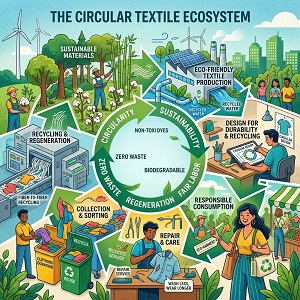
In response to market pressures, Vietnamese enterprises are prioritizing higher-value orders with favorable commercial terms and greater production efficiency. Furthermore, strict sustainability and technical requirements in demanding markets such as the EU and the US—including labor standards, supply chain traceability, ESG practices, and carbon footprint reduction—are pushing the industry toward greener production models.
To maintain competitiveness, the sector is actively expanding trade promotion, joining major international fairs, accelerating digital transformation, and tightening input quality control. Tran Van Quy, General Director of Trung Quy Textile and Garment Co. in Ho Chi Minh City, noted that combining strict cost controls with consistent product quality will remain essential for businesses adapting to shifting global market dynamics.