
The global textile and apparel landscape is undergoing a massive structural shift as the European Union (EU) aggressively tightens its environmental regulations. Through sweeping new legal frameworks like the Ecodesign for Sustainable Products Regulation (ESPR), Digital Product Passports, and Extended Producer Responsibility (EPR), the EU is actively banning the destruction of unsold inventory to halt fast-fashion waste. Rather than feeling squeezed by these compliance hurdles, Turkiye—the EU’s third-largest apparel supplier, generating nearly $10 billion annually in garment exports—is strategically pivoting to establish itself as the new epicenter of Europe's circular fashion ecosystem.
For decades, Turkish manufacturers have thrived on a competitive edge rooted in speed and geographical proximity. Boasting overland transit times of just three to seven days into the heart of Europe—compared to weeks of maritime shipping from Far Eastern competitors—Turkiye naturally became the ultimate "just-in-time" partner for European brands seeking agility through small-batch manufacturing. As strict EU regulations now dismantle the old model of mass overproduction followed by aggressive markdowns, demand is shifting rapidly toward calculated, highly responsive production cycles. In this new landscape, Turkiye's structural flexibility transforms from a mere logistical convenience into a powerful macroeconomic asset.
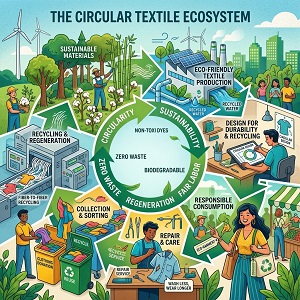
Turkish industry leaders emphasize that the future of garment manufacturing no longer belongs to the cheapest bidder, but to the quickest and most adaptable. European retailers are moving away from enormous seasonal orders toward smaller, trend-sensitive batches that require strict carbon accounting and transparent traceability. Sitting at Europe’s doorstep, Turkish supply chains are undergoing an operational and philosophical overhaul. Local factories are investing heavily in downstream infrastructure, expanding their capabilities beyond assembly lines into advanced textile recycling and sophisticated take-back management systems.
This ongoing transition is successfully redefining the business identity of Turkish apparel. Instead of focusing on manufacturing higher volumes, factories are recalibrating to produce smarter, premium-quality pieces with longer lifespans and greater added value. Although Turkish apparel exports to Europe have faced downward market pressures due to recent global inflation, the ongoing green transition is widely viewed as a golden ticket for long-term growth. As Europe completely rewrites the rulebook of fashion production, Turkiye is positioning itself to be the ultimate winner—proving that speed, circularity, and accountability matter far more than mere scale.