
In the face of the seismic shocks hitting the global cotton markets and the looming shadow of the Strait of Hormuz blockade, France’s industrial textile sector is presenting a different narrative: one of stability and modest growth. Throughout 2025, France recorded a steady climb in industrial textile imports, reaching $609.594 million. This phenomenon is particularly striking to economic observers as it occurs while global supply chains are being throttled by surging freight costs and geopolitical volatility in the Middle East.
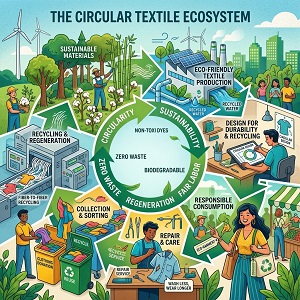
The global fashion industry stands at a critical crossroads between traditional mass production and the urgent demand for environmental accountability. In a bold move to accelerate the transition toward a circular economy, the UK Fashion and Textile Association (UKFT) has announced its official participation in the second edition of the Textiles Recycling Expo. Scheduled for June 24–25, 2026, at the Brussels Expo in Belgium, this event is poised to become a vital intersection for stakeholders across the entire global textile supply chain, reinforcing a collective commitment to a greener future.
The Netherlands is preparing to make a historic mark on the global technical textile industry by hosting its first-ever national pavilion at the prestigious Techtextil trade fair, held from April 21–24, 2026, in Frankfurt, Germany. Organized under the umbrella of the industry association Modint, the pavilion will serve as a stage for a curated group of pioneering Dutch textile innovators. Their collective ambition is clear: to accelerate the transition toward a circular and digitally advanced sector. This move is viewed not merely as a progressive trend but as an economic imperative, given that the Dutch textile, clothing, and footwear industry generates approximately €24 billion annually, accounting for 2.4% of the national income.
Page 8 of 11