
As Bangladesh grapples with unrest in its textile sector, Pakistan stands at a pivotal moment, aiming to revitalize its own textile industry and potentially fill the gap left by its counterpart's challenges. In the not-so-distant past, Pakistan's textile manufacturing sector was a global force. With a robust domestic supply of high-grade cotton and a diverse clientele in the Gulf, Europe, and the United States, the industry was booming. Textiles remained the largest export-oriented sector in the country, with the introduction of GMO cotton seeds in 2005 marking a milestone year. The subsequent years saw record outputs in both cotton crops and textile manufacturing.
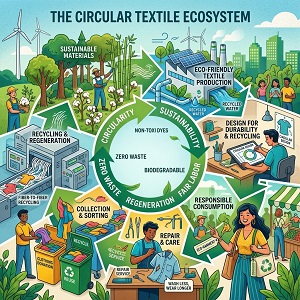
As the fashion industry navigates an era of heightened consumer consciousness, the call for sustainability becomes more imperative, urging businesses to reevaluate practices for the greater good. In a world where fast fashion often takes precedence, the global fashion industry finds itself at a crossroads. The relentless pursuit of mass manufacturing, coupled with low-cost strategies, has led to a significant toll on natural resources and the perpetuation of a disposable culture. In response, a growing awareness of the ecological footprint, worker exploitation, and the consequences of a throwaway mentality has sparked a crucial conversation about sustainability.
Until now, the textile industry and textile products are still the government's mainstay in absorbing labor, meeting domestic needs and generating foreign exchange. However, in the last 10 years this sector seems to have been neglected until it has experienced stagnation in growth and a downward trend in net foreign exchange where export growth averages only about 2% while import growth reaches 9%, this sector seems to have been held hostage by import activities.
Page 5 of 5
Advertorial

Most Read
- Sri Lanka’s Strategic Pivot: Slashing Imports to Conquer the Global Garment Stage in 2026
- Textile Industry in Transition: Pakistan's Path Amid Bangladesh's Struggles
- The Evolution of Performance: Global Outdoor Apparel Market Set to Hit $25.9 Billion by 2026
- Indonesia Textiles and Apparel ; We Ask for Equal Treatment
- Textile Yarn Industry Set to Surpass $127 Billion Amid a Shift to Performance and Sustainability
- The New Face of Opulence: Global High-End Fashion Market Set to Hit $450 Billion by 2031
- Cotton’s Comeback: Global Apparel Strategy Shifts as Synthetic Price Gap Narrows
- Sustainable Fashion: A Paradigm Shift Towards Responsibility and Change
- The Blue Revolution 2026: AI and Data Emerge as the New DNA of the Global Denim Industry
- African Pattern Symphony: When Ankara and Kente Transcend Tradition to Rule the Global Runways
Textiles Circularity